Municipal arboriculture lives at the intersection of public safety, ecology, budget reality, and politics. Trees give identity to streets and parks, they shade bus stops, slow traffic, raise property values, and capture stormwater. The same trees, when structurally compromised, can crush a car roof in seconds or snap a feeder line that keeps a neighborhood’s heat on during a cold snap. Dangerous tree assessment and removal is where sentiment meets sober risk management. The communities that do it well build systems, not just reaction crews. They invest in trained eyes, clear criteria, and equipment that removes doubt along with decayed wood.
What “dangerous” really means in a municipal setting
The word dangerous tends to get tossed around after a storm or when a neighbor feud bubbles over a fence line. In a municipal context, it has a specific meaning. A dangerous tree is one with a structural defect that, under expected loads, has a high likelihood of failure in a manner that could hit a target. That last clause matters. A massive, split-trunk cottonwood in a closed natural area with no trails or infrastructure may be left standing, monitored with a schedule and signs. A smaller ash with brittle deadwood leaning toward a school crosswalk earns a different response.
Certified arborists rely on decision frameworks that assign risk levels based on likelihood of failure, likelihood of impact, and the consequences if impact occurs. A keyed system keeps decisions consistent and defensible. Field staff trained in these assessments document defects such as basal cavities, advanced decay, poor root plate integrity, cracks with shear planes, cankers on critical load-bearing stems, and co-dominant stems with included bark. They look at targets: roadway lanes with 10,000 daily vehicles, play structures, primary feeders, shelters, and power or communication infrastructure.
A useful mental model is time, place, failure mode. When is the load highest for this tree on this site, what will fail first, and what is likely to be struck when that happens. In practice, this means asking whether a crown will shed limbs in summer thunderstorms, whether a saturated hillside puts a shallow-rooted tree at risk of uprooting, or whether winter snow load will snap a long lever arm over a sidewalk. The goal is to predict failure modes in context, not treat every big tree like a bomb.
How municipalities structure assessment
The best municipal programs pair routine inventory work with rapid response capacity. Inventory is the calm-season engine. Crews or contractors walk corridors and park grids with tablets, cameras, and Bluetooth diameter tapes, recording species, diameter at breast height, condition class, defects, clearances, and site conflicts. A modern workflow syncs to a GIS layer so foresters can visualize risk corridors, cluster work for efficiency, and track the age and species mix of the urban forest.
A schedule matters. Mature street trees on arterials are typically inspected every 24 to 36 months, with more frequent checks after construction, flood events, or severe drought years. Parks with low occupancy may rotate on a longer interval, while school routes, transit hubs, and downtowns warrant shorter cycles. Institutional knowledge carries weight. Crews remember the elm on Alder Street that has thrown three limbs in five years, the cottonwoods along the river bank that lean a little more each spring flood, the Norway maple whose roots are undermined by a leaking water main.
Assessment is not only about eyeballing defects. Tap tests, resistance drilling, and sonic tomography help in edge cases where a trunk looks sound but the base rings hollow or where public interest in preserving a landmark tree is high. These tools do not replace judgment. They inform it, letting a city defend a difficult decision to remove a well-loved specimen or to retain a champion with a monitored defect and mitigation like Tree Cable and Bracing.
A quick field triage that anyone can use
While detailed assessments require training, a simple filter helps call-takers, patrol officers, or park staff flag serious cases quickly. The list below captures issues that move a work order to the top of the queue.
- A fresh split that runs into the trunk or a major union, especially after high winds or snow Heaving soil, exposed roots, or a sudden lean that appeared within days Dead or hanging limbs larger than a forearm over roads, sidewalks, or play areas Basal cavities you can reach into more than a hand’s depth, particularly with carpenter ant activity Bark buckling or an audible cracking sound under load, paired with visible stress
Calls that fit one or more of these signs warrant an expedited Certified Arborist Consultation and likely a same-day site visit. Better to spend an hour rolling a truck than explain later why a known high-risk defect remained unaddressed.
Balancing removal with retention
Every municipal forester knows the tension. Remove too aggressively, and you hollow out a canopy that took decades to grow. Move too slowly, and you risk a preventable injury. The middle path is built on progressive mitigation. Tree Pruning & Crown Shaping, especially target pruning of compromised laterals and weight reduction on long lever arms, often buys years for a structurally challenged tree. When co-dominant stems threaten to peel apart under load, Tree Cable and Bracing can redistribute forces. Hardware is not a cure-all, and it requires periodic inspection, but it can stabilize unions that would otherwise fail.
Tree Removal Services come last, not first, in a thoughtful program. When removal is necessary, pair it with immediate Stump Removal & Grinding, especially along sidewalks where tripping liability is real, and root suckers create maintenance headaches. Grinding to 6 to 12 inches below grade is usually sufficient for turf. Planting the right replacement matters more than the act of removal. Right tree, right place is not a slogan, it is a financial plan. A columnar oak under wires, a drought-tolerant hackberry in a median with reflected heat, or a fire-resistant deciduous species at the wildland interface each set a future with fewer emergency calls.
Utilities, private property, and the edges of authority
Nothing complicates schedules like a tree entangled with infrastructure or rooted across a property boundary. Cities should define who has authority to order work and how costs are shared. On public right of way, it is straightforward. Within private lots, the leverage may be limited to abatement orders when a private hazard threatens the public realm. Building clear procedures with code enforcement avoids last-minute scrambles.
Working near electrical conductors shifts control. Utility foresters, not city crews, often dictate approach zones and shutoffs. A three-phase primary at 12 kV is not a place for improvisation. Safe operations call for insulated equipment, minimum approach distances, and coordination windows scheduled days ahead. I have seen crews spend more time waiting for a line drop than cutting wood, yet trying to sneak in cuts between spans puts lives at risk. Budget accordingly for traffic control as well. On multi-lane arterials, the cones, signs, and certified flaggers can cost more than the tree work.
Storms, drought, and the rhythm of failure
Weather drives much of the dangerous tree calendar. The calls jump during shoulder seasons when wind and soils conspire. In late spring, trees are leafed out, sails are up, and the first thunderstorm tests old weaknesses. In midwinter, wet snow and rime ice stack weight on brittle species. Drought sets a different trap. Following a dry summer, root systems recede and cambial growth slows. Trees look stable until the first deep soak snaps shallow root plates free from compacted subsoil. The pattern is predictable enough to plan staffing. Cross-training park maintenance staff to support Emergency Tree Services during peak weeks pays back almost every year.
One October storm in our city dropped 11 inches of wet snow on full canopies. We fielded 430 calls in 48 hours. The triage protocol kept ambulances moving while we stabilized broken limbs threatening live lanes. We staged a crane, two bucket trucks, three chipper crews, and a saw team just for hangers over primary lines. Public information staff pushed a map of closures updated hourly. Residents forgave the noise at 2 a.m. Because we cleared school bus routes by sunrise.
FireSmart thinking within city limits
FireSmart Tree Services are not only for rural properties. Urban and suburban neighborhoods at the edge of grasslands or mixed conifer zones share the same embers and wind. Within municipal parks and open spaces, thinning ladder fuels, breaking up continuous crown connections, and pruning lower limbs on evergreens reduces the chance a ground fire climbs into crowns. Selecting deciduous buffer plantings near structures and clearing accumulations of woody debris in greenbelts make a measurable difference. Where cities own rights of way, integrating FireSmart principles into standard Tree Pruning & Crown Shaping work orders costs little and cuts peak risk.
The less obvious FireSmart tool is education with enforcement behind it. Sound policy sets defensible space expectations for private lots that back onto public open spaces. A city that mows its side of a boundary while neglecting to require clearance on the other side sets up a false sense of security. Cooperative agreements with fire departments make enforcement less antagonistic, more practical.
How risk translates into work orders
From intake to sawdust, a municipal case has a predictable chain. A resident calls, a patrol officer spots a lean, or an inspector flags a defect during a scheduled pass. A Certified Arborist Consultation rates risk and recommends mitigation options, documented with photos and site sketches. The decision tree is usually remove now, prune now and reassess, install support and monitor, or monitor only.
Emergency Tree Services trigger when a condition threatens immediate harm. This can be a live wire entanglement, a limb over a school drop-off zone, or a trunk split above a sidewalk. Non-emergency work is scheduled to cluster by geography to reduce windshield time. In practice, a week’s work will stack eastern sector removals on Tuesday and Wednesday, pruning and Stump Removal & Grinding on Thursday, and spot reinspects on Friday.
Specifications keep outcomes consistent. On removals, the crew chief confirms fall zones and swing radii, assigns ground tasks, and sets up traffic control. On pruning, the work order lists targets by diameter class and location within the crown, specifying branch collar cuts and maximum wound sizes by species. Good specs do not tell a climber how to make a safe cut. They define the result and leave technique to trained professionals.
Equipment, safety, and the quiet logistics of hard work
Most residents see the bucket truck and chipper and think that is the job. The unseen piece is planning to control the scene. Traffic control plans signed off by public works, utility location tickets, wildlife checks for cavity nesters during breeding season, and the daily tailgate safety briefing all matter. On removals near pedestrians, ground spotters keep eyes on every approach. Crews shut down sidewalks and, if necessary, bus stops.
Climbers and operators run a constant risk calculation. Where a stable tie-in point exists, a climber can rig out a crown with blocks and portawraps, lowering each piece in controlled drops, saving fences and planters. Where decay is advanced, a crane picks whole tops to keep weight off a suspect stem. A 30-ton crane with an experienced operator can make short work of what would be an all-day dice roll in gaffs, yet crane days are not cheap. The difference between a https://ziontabg819.overblog.fr/2026/05/complete-stump-removal-grinding-to-eliminate-trip-hazards.html 3-hour crane pick and a 9-hour manual dismantle often works out in favor of the crane when you factor traffic control, staff hours, and liability.
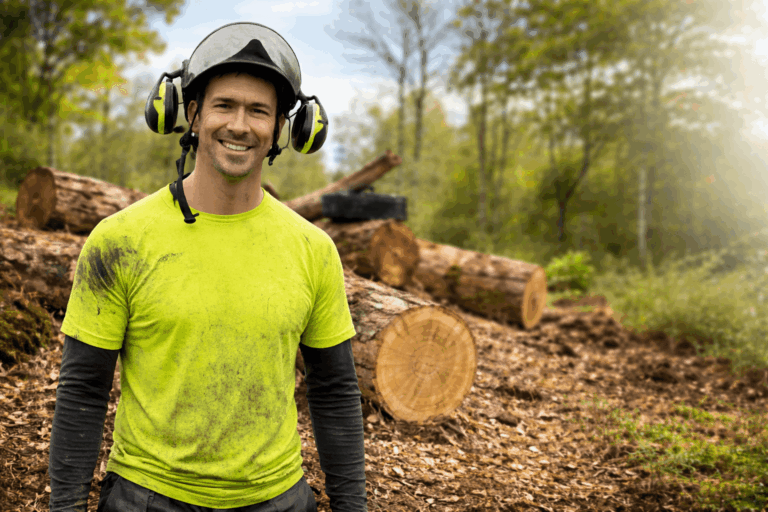
Personal protective equipment is non-negotiable. Helmets with face shields, hearing protection, chainsaw pants, Class 3 high-visibility outerwear near roadways, and cut-resistant gloves are baseline. Communication headsets change outcomes in tight zones where hand signals are not enough. I have watched a near miss become a nonevent because a ground tech could tell a climber to pause a cut as a jogger ducked a barricade.
Budgeting for risk without starving the canopy
Most cities fund tree care from the general fund, sometimes supplemented by stormwater fees or grants. The trap is deferring maintenance to patch potholes or balance shortfalls. Trees age whether or not budgets do. The math is cruel. Every dollar spent on proactive pruning saves multiple dollars later in removals, traffic control, emergency callouts, and claims. Over a five-year horizon, programs that set a minimum pruning cycle of 5 to 7 years for street trees see fewer emergency removals and a flatter spend curve.
Transparent metrics help make the case. Track response times, average cost per removal, number of Emergency Tree Services requests per storm event normalized by severity, and canopy cover trends. Show where investments in Tree Pruning & Crown Shaping led to lower limb failures on comparable corridors. When elected officials can view the municipal forest as infrastructure with service levels, they see pruning and Certified Arborist Consultation as routine, not discretionary.
Communication that keeps trust
Removing a mature tree on a neighborhood street feels personal to residents. A laminated notice in a plastic sleeve tied to the trunk with zip ties buys goodwill, especially when it includes the defect photo, risk rating, and the plan for replacement species. Public maps showing active and upcoming work orders reduce rumor. Post the stump grind schedule. There is something dispiriting about a jagged stump left to rot for months. Stump Removal & Grinding within two to three weeks of felling sets the tone that the city values the space as much as the resident who rakes it.
On emergency nights, push status updates on channels people actually watch. Tie social media posts to a live map of blocked streets. Give a realistic time window for reopening and stick to it. After the event, tell the story with numbers that mean something. Not cubic yards chipped, but how many school routes cleared before dawn, how many power restorations aided by tree clearance, how many claims avoided because a split limb was spotted and removed the week before.
When support beats removal
Tree Cable and Bracing deserves a measured place in municipal work. Done right, it buys time for high-value trees with structural unions that are likely to fail under predictable loads. The usual candidates are co-dominant stems with acute angles and included bark, or unions with early-stage decay where surrounding fiber still has strength. The city should set a policy: install only in trees with high community value, clear inspection schedules, and reachable anchors. Hardware must meet standards, and crews must document installation date, type of system, and the reinspection interval. Time-bound hardware avoids a half-hearted approach where forgotten cables rattle in a canopy for decades.
The lifecycle view: plant, tend, assess, remove, replant
Dangerous Tree Assessment and Removal is one phase in a loop. Planting sets the next 50 years. Species selection fights tomorrow’s pests, diseases, and heat zones. Mulch rings reduce mower blight. Structural pruning in the first 10 years sets unions that will not split under snow load at 25. Midlife crown cleaning and clearance work over streets, sidewalks, and signals keeps sight lines safe and reduces leverage on over-extended branches. Late-life assessments, targeted pruning, and, when needed, removals and Stump Removal & Grinding reset sites for a new generation.
Cities that treat removals as a failure miss the point. A responsible removal is maintenance doing its job. The key is pairing each removal with a plan, ideally a replacement in a better spot with a species fit for the future. Over time, the removal list gets shorter if the planting list gets smarter.
Contractor management and accountability
Many municipalities rely on prequalified contractors to scale up. Bid documents set standards for crew certifications, response times for Emergency Tree Services, and safety protocols. Pay schedules must match reality. If a city pays by diameter alone, it might incentivize speed over care. If it pays by time and materials, it might invite inefficiency. A hybrid approach works. Flat rates for routine Tree Pruning & Crown Shaping and Stump Removal & Grinding, with time-based rates for storm mobilization or complex crane work, balance incentives.
Inspect the work. Spot checks on a percentage of jobs, with the right to withhold payment for out-of-spec cuts or insufficient cleanup, maintain quality. Hold annual safety stand-downs with contractors to review incidents and near misses. Share lessons learned across crews. The wood does not care what logo is on the bucket truck. Gravity treats everyone the same.
Wildlife and timing considerations
Municipal trees are habitat as well as hazards. Nesting birds, bats roosting in cavities, and squirrels complicate timelines. Policies aligned with local wildlife regulations minimize conflicts. In practice, this means targeted work outside peak nesting windows when possible, and adjustments on site when active nests are found. When emergencies force action, document the condition and consult wildlife agencies where required. Residents who see care taken to protect nonhuman neighbors are more forgiving when removals happen elsewhere.
A municipal emergency playbook that works
No two storms play out the same, but a tested playbook saves hours when minutes count. Here is a streamlined version that scales from a neighborhood microburst to a citywide wind event.
- Activate a unified command with public works, police, fire, utilities, and communications Stand up a dedicated intake line and triage map, and assign arborists to classify calls by risk and target Dispatch saw teams to clear life-safety hazards first, then open emergency routes, then address secondary blockages Pre-arrange crane, bucket, and debris hauling contracts, with surge pricing locked and standby thresholds defined Issue clear public updates with estimated restoration times, detours, and safety reminders about downed lines
The simplicity here hides a hundred small tasks. Fuel logistics for chippers, after-hours key access to parks, and tow contracts for cars trapped under limbs. Test these assumptions once a year on a blue-sky day. The first time to learn that a yard gate will not fit your largest loader is not at midnight in sleet.
Where technology helps without replacing judgment
Software now flags high-risk corridors using canopy age, species susceptibility, wind exposure, and target density. A GIS layer that mixes inspection data with claims history points to intersections where a single day of crown cleaning could prevent the next call. Remote sensing helps find dead or declining crowns across large areas after drought, and LiDAR can refine clearance models over roads and rails. These tools earn their keep when they push staff to the right places at the right times. They do not replace a climber’s assessment of a compression crack at a branch collar or the soft feel underfoot of a failing root plate.
Integrating the service lineup
Residents do not call and ask for Tree Removal Services or a Certified Arborist Consultation by name. They say the tree looks scary. Build the intake system to translate that language into the right response. Dangerous Tree Assessment and Removal sits at the center of a ring that includes Tree Pruning & Crown Shaping, Tree Cable and Bracing, FireSmart Tree Services, Emergency Tree Services, and, when the cut is made, Stump Removal & Grinding. Each service connects to the others. A good assessment prevents an unnecessary removal. Smart pruning reduces emergencies. Bracing defers the day a crane blocks Main Street. FireSmart work lowers the chance a canopy becomes a fuse. A tidy stump grind helps a neighbor accept a hard decision.
A final, practical note
If you manage trees for a city, walk your critical corridors right after the first big wind each season. Bring a camera, a diameter tape, and a mallet. Tap the basal flare of your oldest street trees. Listen for the thud that does not match the rest. Note new leans, soil heave, or sidewalks lifted by roots that now lack soil support. Those notes will turn into next week’s work orders. They will also be the story you tell when someone asks why the city cut a tree that looked fine to them from the curb. You will have seen what matters up close, not just on a spreadsheet.
The work is never finished, but it has a rhythm. Assess with trained eyes, act with care, communicate with respect, and keep the long view. Do that, and your dangerous tree program becomes a cornerstone of a healthy, resilient urban forest.
Ace Tree Services Ltd.
Name: Ace Tree Services Ltd.Address: 4656 Wallace Hill Road, Kelowna, BC
Postal code: V1W 4C2
Phone: 250-212-9593
Website: https://acetree.ca/
Hours:
Monday: 7:00 AM - 5:00 PM
Tuesday: 7:00 AM - 5:00 PM
Wednesday: 7:00 AM - 5:00 PM
Thursday: 7:00 AM - 5:00 PM
Friday: 7:00 AM - 5:00 PM
Saturday: 7:00 AM - 5:00 PM
Sunday: Closed
Open-location code (plus code): RHF8+8G Kelowna, British Columbia, Canada
Map/listing URL: https://www.google.com/maps/place/Ace+Tree+Services+Ltd./@49.8232606,-119.4337283,659m/data=!3m2!1e3!4b1!4m6!3m5!1s0x537d8b1d074815c5:0x450b88afa7a41435!8m2!3d49.8232606!4d-119.4337283!16s%2Fg%2F11ydkpnh22
Embed iframe:
"@context": "https://schema.org", "@type": "HomeAndConstructionBusiness", "name": "Ace Tree Services Ltd.", "url": "https://acetree.ca/", "telephone": "250-212-9593", "address": "@type": "PostalAddress", "streetAddress": "4656 Wallace Hill Road", "addressLocality": "Kelowna", "addressRegion": "BC", "addressCountry": "CA" , "openingHoursSpecification": [ "@type": "OpeningHoursSpecification", "dayOfWeek": "https://schema.org/Monday", "opens": "07:00", "closes": "17:00" , "@type": "OpeningHoursSpecification", "dayOfWeek": "https://schema.org/Tuesday", "opens": "07:00", "closes": "17:00" , "@type": "OpeningHoursSpecification", "dayOfWeek": "https://schema.org/Wednesday", "opens": "07:00", "closes": "17:00" , "@type": "OpeningHoursSpecification", "dayOfWeek": "https://schema.org/Thursday", "opens": "07:00", "closes": "17:00" , "@type": "OpeningHoursSpecification", "dayOfWeek": "https://schema.org/Friday", "opens": "07:00", "closes": "17:00" ], "geo": "@type": "GeoCoordinates", "latitude": 49.8232606, "longitude": -119.4337283 , "hasMap": "https://www.google.com/maps/place/Ace+Tree+Services+Ltd./@49.8232606,-119.4337283,659m/data=!3m2!1e3!4b1!4m6!3m5!1s0x537d8b1d074815c5:0x450b88afa7a41435!8m2!3d49.8232606!4d-119.4337283!16s%2Fg%2F11ydkpnh22"
Ace Tree Services Ltd. provides professional tree removal, pruning, stump grinding, emergency response, and arborist consultations for properties in Kelowna and across the Okanagan Valley.
The company works with homes, commercial properties, and municipal settings where tree work needs to be planned carefully around buildings, fences, driveways, landscaping, and other site constraints.
Based in Kelowna, the team is positioned to help nearby neighbourhoods and surrounding Okanagan communities with routine tree care and time-sensitive storm cleanup.
Customers looking for careful tree work often want a crew with certified arborist training, insurance, and a methodical approach to higher-risk removals.
Services also include dangerous tree assessment, cabling and bracing, and wildfire risk reduction tree work for properties that need longer-term planning.
To request a quote or discuss tree care options, call 250-212-9593 or visit https://acetree.ca/.
A public map listing is available to help customers confirm the business location and get directions before a site visit or estimate.
For Kelowna property owners who need pruning, removals, or emergency tree help, a local tree service can make it easier to schedule site-specific recommendations and cleanup.
Popular Questions About Ace Tree Services Ltd.
What services does Ace Tree Services Ltd. provide?Ace Tree Services Ltd. lists tree removal, stump removal and grinding, tree pruning and crown shaping, emergency tree service, arborist consultation, dangerous tree assessment and removal, cabling and bracing, and wildfire risk reduction tree work.
Who does Ace Tree Services Ltd. serve?
The company describes its work as serving homes, businesses, and municipalities in Kelowna and across the Okanagan Valley.
Is emergency tree help available?
Yes. Emergency service is listed for downed or uprooted trees, dangerous tree assessment, stabilization work, and branch cleanup. If a tree is near power lines, the safest first step is to stay clear and contact the utility provider before any tree work begins.
Do I always need a permit to remove a tree?
Not always. Permit requirements can depend on where the tree is located and whether it is near a creek, lake, steep slope, or another protected area. It is best to check local rules for the specific property before removal work starts.
How deep does stump grinding usually go?
Standard stump grinding is typically described as going about 6 to 12 inches below ground level, which is often enough for grass or surface landscaping. Deeper grinding may be possible when site plans call for it.
How much of a tree can be safely removed at one time?
That depends on the species, age, health, and structure of the tree. In practice, good pruning is usually about removing the right limbs for health, clearance, and structure rather than chasing a fixed percentage.
What are common signs that a tree may be dangerous?
Large dead limbs, visible cracks, a new lean, root damage, canopy dieback, or storm-related damage can all be warning signs. Trees near structures deserve extra attention when any of those issues appear.
What is cabling and bracing in tree care?
Cabling and bracing are support systems used to reduce the risk of failure in trees with structural weaknesses that may still be worth preserving. They are generally used to add support, not to replace good assessment and ongoing maintenance.
How do I contact Ace Tree Services Ltd.?
Call 250-212-9593.Website: https://acetree.ca/.
Landmarks Near Kelowna, BC
Downtown KelownaThe downtown core is a practical reference point for lakefront neighbourhoods, mixed-use streets, and central residential properties. If your property is near downtown, tree pruning, removals, and cleanup can be planned around tighter access and nearby structures.
Knox Mountain Park
This well-known park north of downtown is a recognizable landmark for nearby homes and hillside properties. If you are close to this area, ask about tree assessment, trimming, or removal work suited to sloped sites.
Mission Creek Greenway
The greenway runs through several parts of Kelowna and is a useful landmark for nearby residential areas. If your property borders or sits near this corridor, site-specific tree planning is especially important.
Pandosy Village
Pandosy is one of Kelowna’s most recognizable neighbourhoods and a common reference point for south-central properties. If you are nearby, request help for pruning, removals, or storm cleanup around homes and small commercial sites.
Rutland
Rutland is a major east Kelowna neighbourhood with a mix of residential and local commercial properties. If you are located in or near Rutland, tree work can be scheduled for both routine maintenance and urgent situations.
Landmark District
This central business-focused area is a practical landmark for offices, service properties, and nearby residential streets. If your site is near the district, ask about careful tree work around parking, access lanes, and built-up lots.
Kelowna’s North End
The North End sits on the edge of downtown and is a useful reference for nearby homes, industrial sites, and commercial properties. If you are in this part of the city, request tree care based on the layout and constraints of the lot.
Airport District
The Airport District is a recognizable north Kelowna reference point for surrounding properties and access routes. If you are in this area, ask about tree services for residential acreage, commercial sites, or roadside cleanup needs.
Glenmore & Dilworth
These established Kelowna neighbourhoods are useful landmarks for central and north-central service calls. If your property is nearby, pruning and removal work can be tailored to mature trees and established landscapes.
Highway 97 Corridor
Highway 97 is one of the city’s main travel routes and a common way to describe location within Kelowna. If your home or property is just off the corridor, a clear landmark reference can help speed up quote scheduling and site planning.